
"Allevia: Effective Allergy Relief | The Chemist Online
3 min readThe Chemist Online team
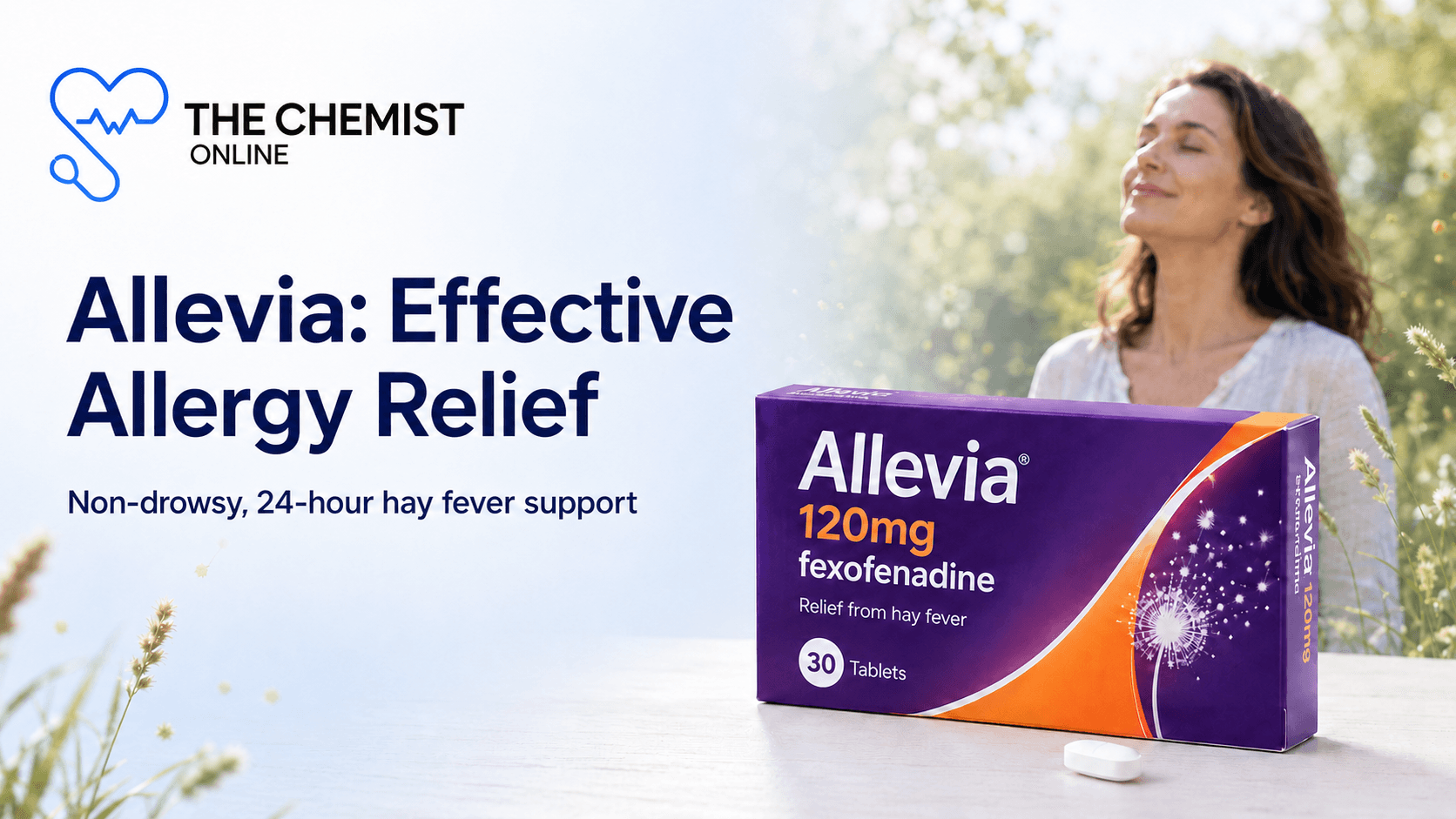
Allevia: Effective Allergy Relief | The Chemist Online
What is Allevia?
Allevia is an over-the-counter medication used to alleviate symptoms associated with seasonal allergic rhinitis, commonly known as hay fever. It is effective in managing sneezing, a runny nose, itchy or watery eyes, and a scratchy throat. The key component is fexofenadine, a second-generation antihistamine, which offers relief without causing the drowsiness typical of first-generation antihistamines.
Overview of Allevia's Active Ingredient
Fexofenadine is a non-sedating antihistamine that works by blocking histamine, a chemical responsible for allergy symptoms. Because it does not easily penetrate the brain, it minimises sedative effects, making it suitable for daytime use.
How Does Allevia Work?
Mechanism of Action
Fexofenadine primarily targets peripheral H1 receptors to reduce allergic symptoms. When allergens are present, histamine is released, triggering allergic reactions. Fexofenadine binds to H1 receptors, preventing histamine from attaching and thereby reducing symptoms like itching and swelling.
Effectiveness for Allergy Relief
Clinical studies indicate that fexofenadine can be effective for many individuals managing hay fever and chronic idiopathic urticaria. The medication provides symptom relief for up to 24 hours, with some users experiencing alleviation within an hour, though individual responses can vary.
How to Use Allevia
Dosage Instructions
For adults and children over 12, the standard dosage is a 120mg tablet taken once daily. To ensure maximum effectiveness, take it at the same time every day.
Administration Guidelines
Swallow the tablets whole with water, preferably with or after food to aid absorption. If you miss a dose, take it as soon as you remember, unless it's nearly time for your next dose.
Consistency and Adherence
Continuous daily treatment throughout the allergy season can help maintain comfort during high pollen periods.
Benefits of Using Allevia
Non-Drowsy Formula: As a second-generation antihistamine, Allevia is less likely to cause drowsiness, allowing users to maintain their daily activities.
Long-Lasting Effect: A single daily dose may provide control of symptoms for many users.
Proven Effectiveness: Studies suggest its potential efficacy in managing hay fever and chronic idiopathic urticaria for many individuals.
Potential Side Effects of Allevia
Common Side Effects
Generally well-tolerated, some users might experience headaches, dizziness, dry mouth, or nausea.
Rare but Serious Side Effects
Though rare, any signs of an allergic reaction like swelling of the face, lips, tongue, or throat require immediate professional advice.
Who Should Avoid Allevia?
Populations that Should Not Use Allevia
Individuals allergic to fexofenadine or any component of Allevia should avoid use. Pregnant or breastfeeding individuals should consult a pharmacist before using it.
Interactions with Other Medications
Antacids: Allevia may interact with antacids containing aluminium or magnesium. It's advisable to take Allevia two hours before or four hours after these antacids.
Other Medications: Those taking medications like ketoconazole or erythromycin should seek guidance from a pharmacist.
Allevia Alternatives: A Comparison
Comparative Table with Other Antihistamines
AntihistamineActive IngredientNon-DrowsyCommon Brand NamesAlleviaFexofenadineYesTelfast, AllegraCetirizineCetirizineYesZirtek, BenadrylLoratadineLoratadineYesClaritynChlorpheniramineChlorpheniramineNoPiriton
Pros and Cons
Allevia Pros: Rapid onset, minimal drowsiness, potentially effective for long-term use.
Allevia Cons: Possible interactions with specific antacids and antibiotics.
Practical Tips for Using Allevia
Regular Use: Consistency enhances effectiveness; maintain a regular schedule.
Hydration: Drink plenty of water to aid in swallowing and reduce dry mouth.
Managing Side Effects: Promptly report prolonged or severe side effects to a pharmacist.
FAQs
Is Allevia suitable for children?
Allevia is recommended for children aged 12 years and above. For younger children, consulting a pharmacist is advisable.
Can you drink alcohol while taking Allevia?
While alcohol doesn't affect Allevia's efficacy, it may increase side effects like dizziness or dry mouth.
How quickly does Allevia work?
Some users may experience symptom alleviation within an hour, but individual responses can vary.
Is long-term use of Allevia safe?
Long-term use can be safe for many people, but should be reviewed periodically with a pharmacist for individual suitability.
What if I accidentally take more than the recommended dose?
Seek immediate professional advice to ensure your safety.
Is Allevia gluten-free?
Allevia is not known to contain gluten, but check the packaging or consult a pharmacist for confirmation.
Can I take Allevia with painkillers?
Allevia can generally be taken with common painkillers, but consult a pharmacist for any specific combination concerns.
For personal advice or to explore our allergy range, shop the range at The Chemist Online.